
Is It Time For My Braces To Come Off Yet?
Is it time for my braces to come off yet? Modern braces come off when your teeth, roots, and bite all meet the goals in your treatment plan, not simply when the front teeth look straight. Readiness gets confirmed with digital photographs, digital scans, and X-rays before your expert orthodontist schedules debonding.
It’s a question a lot of patients start asking somewhere around month ten. Your teeth look great in photos. The smile already feels different. So why are you still coming in for adjustments?
Here’s what’s actually happening in those final months.
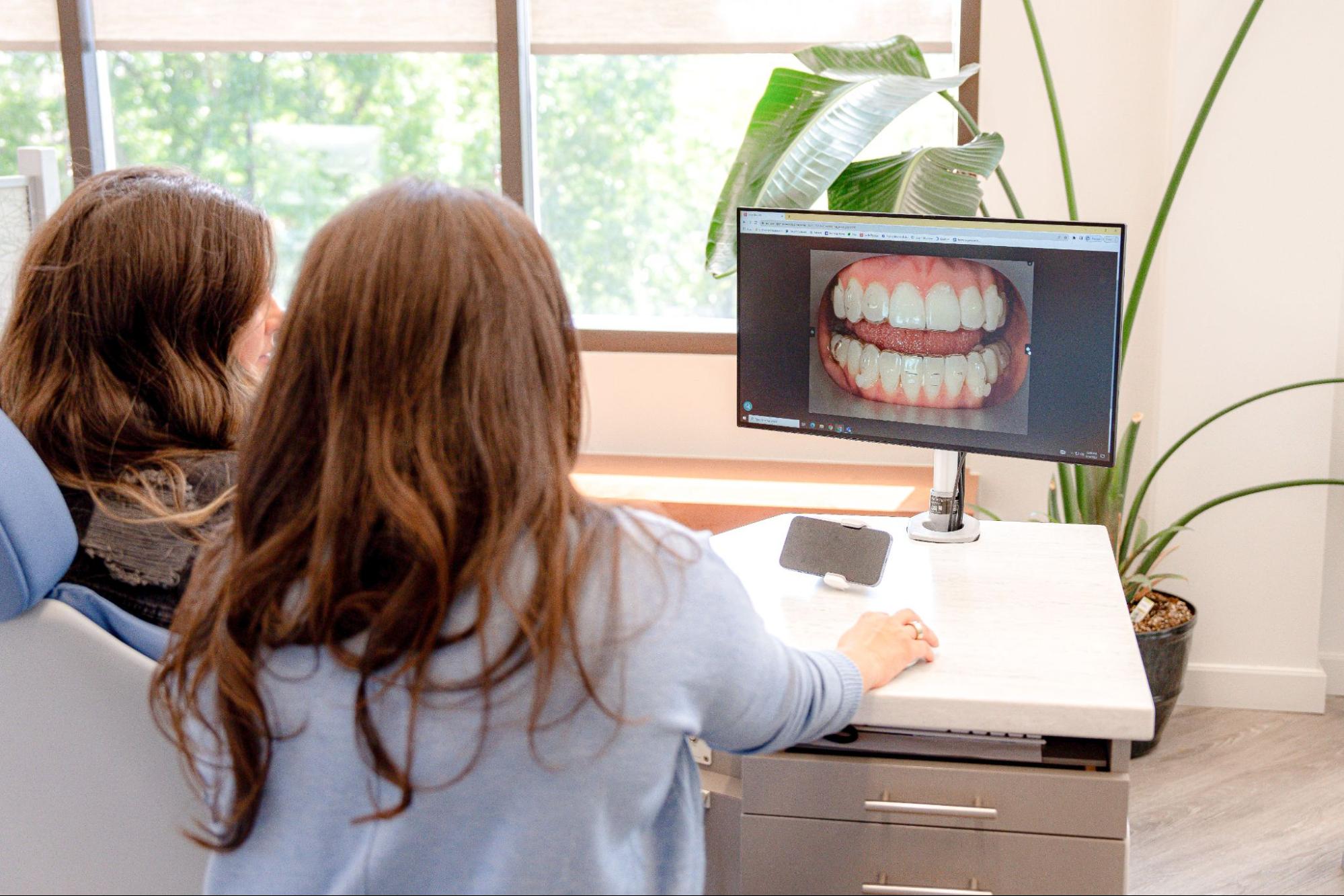
What “Ready for Braces Removal” Actually Means
Ready means finished, not just presentable. Removal day (called debonding) happens when the brackets and adhesive can come off the enamel without leaving unfinished work behind.
When Dr. J. Dempsey Smith, Dr. Gavin Heymann, and Dr. Katya Skillestad evaluate whether you’re ready, they’re checking several things at once:
- Alignment: teeth sit in a smooth, even arch
- Rotation: each tooth faces the right direction, including the ones that twist slightly
- Root position: roots are upright and parallel under the gumline
- Overbite and overjet: upper and lower front teeth relate correctly
- Midline: the center of your upper arch lines up with your lower arch and face
That last stretch of treatment is called detailing, and it’s often the part patients notice least. Your teeth already look good. Meanwhile, small wire bends and elastic changes are moving roots and settling contacts that only show up on X-rays and scans.
Complete treatment with modern braces typically runs 12 to 24 months. Every case is different, and a bite correction takes longer than closing a small space.
How Your Expert Orthodontist Decides It’s Time for Your Braces to Come Off
Braces come off after a five-step review: progress records are compared to the original plan, the bite is checked in function, root position is confirmed on X-rays, final detailing is completed, and then debonding is scheduled with a retainer scan the same day. Nothing about the decision is guesswork.
Here’s how the process runs at Smith & Heymann Orthodontics:
- Progress records. New digital photographs, digital scans, and X-rays get lined up against your original treatment plan so your doctor can see exactly what’s left.
- Bite check. You bite down, and your doctor watches how the upper and lower teeth meet. Even contact matters more than a straight front six.
- Root position review. Roots need to be upright and roughly parallel. This is the step patients can’t see in the mirror, and it’s a major reason results stay put.
- Final detailing. Small wire bends, a change in elastic wear, or a short set of refinement aligners fine-tune the last details.
- Debonding appointment. Brackets come off, adhesive is polished away from the enamel, and a retainer scan is taken so your retainer fits the smile you just finished.
Between visits, Dental Monitoring lets our team track your progress from your phone. That means fewer surprises and faster answers when your teeth move ahead of schedule or behind it.
Our talented team of doctors brings that training to every one of these checkpoints. The team you choose makes all the difference in how a case finishes.
Why Waiting Until Treatment Is Truly Finished Pays Off
Those last few months do quiet, important work. Skipping them trades a few saved weeks for a weaker long-term result.
Finishing fully gives you:
- Even chewing forces. A corrected bite spreads pressure across many teeth instead of loading a few, which reduces uneven enamel wear over the years.
- Stability. Upright, parallel roots resist shifting. Teeth that were rushed into position tend to drift back toward where they started.
- Lower odds of retreatment. Relapse is a common reason adults come back for a second round of modern braces. Finishing the plan the first time, then keeping up with your retainer afterward, is the simplest way to protect work you’ve already invested in.
- Better closed spaces and rotations. Fully corrected rotations photograph better and hold their position more reliably.
- A calmer jaw. When the bite settles correctly, patients report fewer jaw and TMJ complaints.
Think of it this way. The visible part of treatment finishes early. The durable part finishes last.

Straight-Looking Teeth vs. a Finished Bite: What’s the Difference?
Straight front teeth can hide plenty. A beautiful smile line can sit in front of an uncorrected overbite, crossbite, or open bite.
| What’s being evaluated | Straight-looking teeth | A finished bite |
|---|---|---|
| Front teeth appearance | Aligned and photo-ready | Aligned and photo-ready |
| Rotations | Minor twists may remain | Fully corrected |
| Root position | Often still tipped | Upright and parallel |
| How upper and lower teeth meet | May not be corrected | Even, functional contact |
| Space closure | Spaces may reopen | Closed and stable |
| Long-term stability | Higher relapse risk | Built to hold with a retainer |
Rotations and root angles are usually the last items on the list, which is exactly why treatment continues after your smile already looks finished.
Damon metal braces and Damon clear braces handle detailing with built-in clips and precise wire adjustments. Invisalign finishes with refinement aligners built from a fresh digital scan. Same destination, different tools.
Removing modern braces early can undo months of that work, because roots that haven’t settled pull teeth back toward their old positions.
What Affects Your Smile Reveal Timeline
Three things drive your timeline more than anything else: how complex the case is, where you are in growth and development, and how consistently you wear your elastics or Invisalign. Complete treatment with modern braces typically runs 12 to 24 months, and compliance is the factor most likely to move that window in either direction. For a fuller breakdown by case type, see our orthodontic treatment timeline.
Broken brackets, missed appointments, hygiene issues, and coordination with other providers can each add weeks. None of those are dealbreakers on their own, but they stack up quietly over a long treatment plan.
The main variables:
- Case complexity. Crowding, wide spacing, bite correction, and impacted teeth all require more time than mild alignment.
- Age and growth stage. Growing children and teens sometimes need extra time while the jaws develop, and that timing can work in your favor.
- Elastic and aligner wear. Elastics that sit in a backpack don’t correct bites. Aligners worn 20 hours instead of 22 add up fast.
- Broken brackets and lost aligners. Each one usually costs a visit and a few weeks of progress.
- Oral hygiene. If gums become inflamed or decay develops, treatment may need to pause until things are healthy again.
- Coordination with other care. Cases involving a crown, an implant site, or an oral surgeon require careful sequencing between offices.
None of this means you’re behind. It means your doctor is protecting the result you came in for.

Signs Your Braces May Be Coming Off Soon
Some clues are hard to miss once you know what to watch for.
- Final records or a retainer scan. When your team takes a retainer scan, removal is close.
- Shorter visits. Appointments turn into quick check-and-adjust stops instead of longer wire changes.
- You’re wrapping up elastics or moving through a final refinement stage.
- Your bite feels settled. Teeth touch evenly when you close, and nothing feels like it’s hitting first.
- Retainer talk starts. Your doctor begins discussing retainer type and a wear schedule.
- You asked and got a window. This is the most reliable sign of all.
Just ask at your next visit. Dr. Smith, Dr. Heymann, and Dr. Skillestad will tell you what’s left and give you a realistic timeframe. No pressure, just answers.
Still deciding where to start? A free consult is the easiest way to learn what modern braces or Invisalign would involve for you or your child, roughly how long treatment would take, and what the finish line actually looks like. Our talented team of doctors sees patients of all ages, and every visit includes a plain explanation of where your teeth are now and what still has to move. Bring your questions to your next adjustment, or schedule a free consult whenever it’s convenient. Either way, you’ll leave knowing where you stand and what comes next.
Frequently Asked Questions About Braces Removal
How long does it take to get braces off?
Debonding usually takes 30 to 60 minutes from start to finish. That includes removing each bracket, polishing the adhesive off your enamel, and taking a digital scan for your retainer. Most patients are surprised by how quickly it goes after months of treatment.
Does getting braces off hurt?
You’ll feel pressure and some vibration, but not discomfort that lingers. Brackets release with a gentle squeeze, and the polishing step feels similar to a dental cleaning. Teeth can feel slightly tender for a day or two afterward as they settle.
Can I ask to get my braces off early?
Yes, you can ask. Your doctor will show you the progress records and explain what’s still in motion, which is often root position or bite correction you can’t see in a mirror. Sometimes there’s flexibility. Other times waiting a few more weeks protects a result you’ll keep for decades.
Why do my teeth feel loose or look different right after debonding?
Slight looseness is normal and temporary. The bone and ligaments around each tooth are still firming up after months of controlled movement, which is exactly why your retainer goes in right away. Your teeth may also look larger or smoother once the brackets are gone.
Do I have to wear a retainer forever?
Long-term retainer wear is the standard recommendation, and there’s a good reason for it. Teeth don’t stop moving in adolescence, and shifting continues gradually throughout adult life. Most patients wear retainers full time briefly, then move to nights only, and keeping up with nights is what protects your amazing results.
Will my teeth need whitening or polishing after braces?
Your enamel gets polished during the debonding appointment, which removes adhesive and brightens the surface. Some patients notice small color differences and choose whitening afterward. Your doctor will suggest waiting a short while so your teeth and gums settle first, then help you decide what makes sense.